


{SECTION_MENU}
"History teaches us that peace cannot be built on hatred, violence, or injustice." -Pope John Paul II.
Intent
At St Mary’s, we want our children to be curious about the past and confident in asking questions about it. History helps children understand how people, places and societies have changed over time, while encouraging them to think carefully about why those changes happened and what we can learn from them.
Our curriculum gives children a strong sense of chronology and the wider story of Britain and the world. Alongside learning about significant people, events and civilisations, children explore the experiences of ordinary people and consider different perspectives. We want them to understand that history is not simply a collection of dates and facts, but a story shaped by people, choices, beliefs, challenges and discoveries.
We aim to develop children who are thoughtful, respectful and inquisitive historians. Through the study of the past, children are encouraged to recognise the achievements of others, understand injustice and inequality, appreciate different cultures and consider how the past continues to shape the world they live in today.
Our location gives us a fantastic opportunity to bring history to life. Living in Deal, surrounded by an exceptionally rich and varied historical landscape, means that history is all around us. From our local coastline and castles to the wider history of Kent and London, children are encouraged to see that the past is not something that exists only in books – it can be explored, experienced and questioned.
Implementation
History is taught through a carefully sequenced curriculum which builds children's knowledge and understanding as they move through the school. New learning is connected to what children already know, helping them to develop a secure understanding of chronology, cause and consequence, change and continuity, significance and historical interpretation.
Children encounter a wide range of historical periods and civilisations, including significant aspects of British history alongside studies of the wider world. We make sure children revisit and build upon key ideas, vocabulary and knowledge rather than treating each topic as an isolated unit.
Lessons provide a balance of knowledge and enquiry. Children are taught the essential facts they need to understand a period before being encouraged to investigate, question and interpret evidence. They work with a range of sources, including photographs, artefacts, maps, documents, eyewitness accounts and historical interpretations. Children learn that sources do not always tell the whole story and that historians sometimes disagree.
We place particular value on historical vocabulary and talk. Children are given regular opportunities to explain their thinking, make connections, ask questions and use evidence to support their ideas. As they progress through the school, we expect their explanations to become increasingly detailed, precise and well supported.
A key part of our approach is taking learning beyond the classroom. We make the most of the history on our doorstep, with regular educational visits and experiences that allow children to see and explore the places they have been learning about. Dover Castle and other local historical sites provide particularly valuable opportunities for children to experience the past first-hand and develop a sense of connection with the history of their local area.
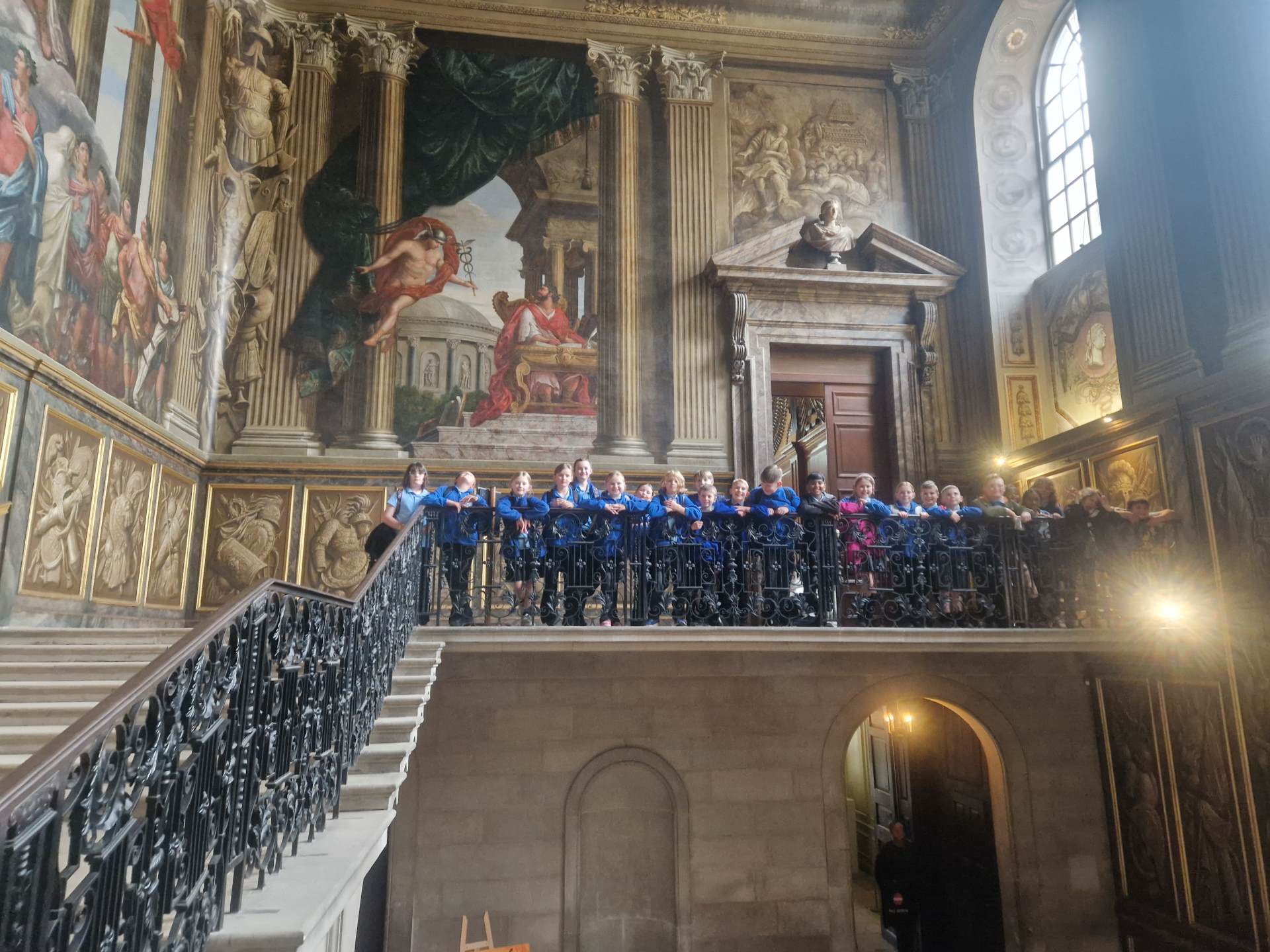
Our children also have opportunities to experience the history of London through yearly visits, where they explore some of the capital's most significant landmarks and sites. Visits to places such as the Tower of London, Hampton Court Palace and Kensington Palace allow children to stand where historical events took place, see historic buildings and objects for themselves, and make meaningful connections between classroom learning and the wider world.
These experiences are not simply additional activities; they are an important part of our History curriculum. They help children to remember, question and understand their learning in a way that cannot always be achieved within the classroom.
Impact
By the end of their time at St Mary’s, children will have developed a strong and meaningful understanding of the past and how it has shaped the world around them. They will know more, remember more and be able to use what they have learned to make connections across different periods of history.
Our children will be able to:
- place key events, people and periods in chronological order;
- use a growing range of historical vocabulary accurately;
- explain how and why things changed over time;
- identify causes, consequences and similarities and differences;
- understand the significance of important people and events;
- ask thoughtful historical questions;
- use evidence to investigate the past;
- recognise that historical accounts can differ and consider why;
- talk confidently about what they have learned and support their ideas with evidence;
- make connections between local, national and global history;
- use their experiences of historical places and sites to deepen their understanding of the past.
Most importantly, we want children to leave St Mary’s with a genuine fascination with history. We want them to question, investigate and think deeply rather than simply remember facts for a test. Our regular visits and experiences help children to see history as something real and tangible – whether they are exploring a castle on their doorstep, standing inside the Tower of London or walking through the rooms of a royal palace.
History should help our children understand where they have come from, appreciate the experiences of others and develop the curiosity and critical thinking they need to make sense of the world they are growing up in.